My Progression
- I began to believe that I was unlucky after other people told me I seemed unlucky.
- I wondered why God would let me be unlucky/would not protect me even though I have served him so long and been faithful. I became bitter. I am bitter.
- I stopped praying to God. I only make intercession for others.
- I began to question certain promises (protection, preparing a way for me, working for the good of those who love him).
- I stopped being able to worship, stopped leading worship, stopped singing worship.
- I questioned all his promises. I questioned the reliability of the bible that held these empty promises. I questioned his character. I still question these.
- I stopped reading the bible. I read every now and then to remember things, but I read it as a history book (and philosophy book). Although, I remain uncertain on its validity.
- I began to look at the data of the world - the suffering along with the good, and questioned his goodness. I still question his goodness.
- I made a key change: rather than holding that god is good and then having to struggle with the misperception I see in the world, I took a more sane approach - if the data doesn't match the conclusion, the conclusion is wrong. So, I began to believe that god may not be good.
- I continued looking at the data and believed that MOST of it made the most sense if there was no god at all. EVERYTHING made more sense except for miracles. (I have always been certain of a spiritual realm - with tormenting and possession and witchcraft and other inexplicable events, something is beyond the physical for sure).
- There were dreams of people seeing Jesus and coming to faith in Christ. And then there were dreams of people seeing Muhammed and turning to Allah. There were the healings of the christians, and the healings of the witches. There were 'changed lives', people 'bearing good fruit after conversion', but I saw this in every religion. People had religious experiences with the same difficulty explaining their experiences, as if they were spiritual and physical words couldn't quite capture what they were seeing/feeling during them. These also came from many different religions. Now, miracles can make sense to me without God
Testimony of Robert Davila: Conversion to Islam
The Data I See
I'll make this quick: tons of babies die of malnourishment, miscarriages, and SIDS. They were born into that destiny. Children are given as sex slaves and labor slaves. Many are born into a high probability of this. The wicked rule powerfully - if they don't care about human lives, nothing can stop them. The righteous die quickly. There seems to be no god protecting them. There is no justice at this time.
 |
| Trafficking Statistics |
In particular, with Christianity, with which I am very familiar, I see a lot of manipulation of the mind - not by leaders or anyone in particular, but by the principles of the religion itself.
We are to have faith in what we cannot see - to believe even without proof. To hold steadfast to the promises of God, even if there seems to be no data to support those claims. To hope in a future justice (where God judges) rather than expecting full justice in this lifetime. To continue to meet together - keep going to church - continuously hear sermons and listen to songs that describe who god is and what he is like and what he would do in a certain situation based on his character (most times rather than hearing what he actually did in certain situations based on what happened). We are supposed to keep praying and keep reading the bible, meditating on it day and night like David.
All of this is like a continuous brainwashing (for lack of a better word). Eventually, you believe what you're hearing because you've heard it so many times. People believe anything they hear over and over - it's how people end up believing ridiculous things and following cults.
The main problem is that there is no acceptable option to leave Christianity - you have to go against the advice and teaching of the bible in order to do that. If you have doubt, you are advised to press in and keep the faith until your doubt dissipates. I feel that my doubt dissipated many times just because I continuously told myself what to believe
Miracles
 There are 5 options to explain miracles with what I am seeing: 1. There are good spirits that just do good things randomly, often when people pray, 2. There is a very nice god that doesn't care what name he is called by (Allah, Jesus, Mother Nature, etc.) and he is willing to do good things sometimes when people ask, 3. There is a power within humans to heal each other, 4. There is one true god that does miracles and other good or evil spirits that also do miracles for the other gods, 5. There are many gods that do miracles, of equal or varying power.
There is no correlation between how much faith or hope someone has and % healing. There is no correlation between how badly the healing is needed and % healing. There is no correlation between how morally righteous a person is and % healing. There is nothing at all. This makes sense if someone on the outside is controlling the healing.
Miracles & Goodness Option 1: Free Will & Prayer
I've always understood that free will was in effect. If there was a god, he would rather have worship from those who willingly choose it than have robots that have been forced to worship.
The main question now is this: if god is good, shouldn't he intervene and prevent bad things from happening? He is certainly capable of doing this, but he is not doing this. Is there any good way to reconcile this?
For my last 18 years as a christian, I was able to say that we didn't deserve a single good intervention, so if we didn't have god intervene to protect us from bad, that was the norm, and if he did, then we were blessed. I still think that holds, but it makes me uneasy. It's like a technicality rather than an explanation of his goodness.
But I had this amazing thought yesterday: if god always intervened would it be possible for us to understand justice?
Imagine the alternative scenario in which God always prevented every wrongdoing. A man standing across the street plans to kill the woman standing in front of him. He has his knife ready, he psychs himself up to do the task, then a dog pees on his shoe, he looks down, the woman gets into a cab, and the plain is foiled. Next thing you know, he is arrested by the police and thrown in prison. From across the street you think, that poor man who got peed on was sent to jail for no reason! The man across the street thinks to himself, I probably wouldn't even have done it in the end, when in fact, he would have.
 It's hard for us humans to accept that our THOUGHTS of wrongdoing are wrong when the
y don't actually get to be played out. For example, when we PLAN to trick someone, but they don't get tricked, we don't punish ourselves or feel guilty for very long, we just kind of move on. If we do succeed in tricking them, then we can feel guilty for quite some time. Sometimes we even have to apologize and confess ourselves to them.
We actually understand wrongdoing more from watching and judging others actions and results. But, in this case, you are not able to. You just see a poor guy get arrested for no reason. You know that this is commonplace, but you don't know if he was thinking about stealing or murdering or raping or lying. You only were able to watch it happen, no explanation, no murder actually happened. I don't think we would be able to understand justice without actually seeing our actions played out.
So, 100% intervention doesn't work, and there is not 0% intervention, because there are miracles. It's somewhere in between.
So there must be some kind of protocol that determines the rate of intervention. It has to include free will, and it has to allow humans full authority over their actions. The only solution I can think of here is prayer. And maybe that is why God asks us to pray for things that he already knows about. Prayer would work because then the intervention of God would be because of a human act. He could still say no to our prayers. But, it definitely wouldn't happen if we didn't ask, there would be no human intent from free will included. And maybe that's why the bible says, 'you have not because you ask not'.
This would explain why random villages are saved and others are not - because someone random thought of that village, or put their finger on a map and prayed for it. People have their random dreams because they were prayed for. Even the dreams would make sense with the statement, "how will they know if nobody tells them?". They're prayer for a dream would be a way of indirect telling, similar to translating the bible into another language is a form of indirect sharing of the gospel.
Miracles & Goodness Option 2: God Works for the Best of the People
Or maybe God is actually good and he only does good things, but we are too small to understand. Maybe each catastrophe is better than every alternative. That's the classic answer, and it makes me cringe. But, I've tried to spell it out in a non-cringe way for my own sanity:
 I analogize my short-sightedness to army generals. In this story, there is a Master Commander who calls the shots of all generals. He receives reports of everything that is happening, and is the mastermind behind the movement of the entire military. General A is in charge of defending City A with 100,000 people. General B is in charge of defending City B with 50,000 people. City A and City B both come under attack at the same time. Based on the weaponry and the amount of soldiers at each city, the odds seem 70:30 that the cities will be defended. The Master Commander orders General A to abandon his city and go to the defense of City B. General A is outraged and does not understand the Master Commanders orders. If there are equal odds at each city, then why is it that he should leave the city with more people? It would lead to more casualties! He tells the Master Commander that he would not leave unless the Master Commander explains himself. The Master Commander writes back demanding that General A move to City B. He also explains that if the enemy takes City B, then they will also lose the next cities en route from City B, because they are not defended well enough. In the end, if City B were to fall, it would lead to more deaths than if City A were to fall. Although the chances that both cities could be defended successfully is high, the loss of City B would be so devastating that it is not worth risking the 30% loss. The cities en route after City A are adequately defended, also at a 70% victory, and do not warrant as much worry as City B. Because of the reluctance of General A to move, General A arrives 2 days late (added 1 day for the message to the Master Commander, 1 day for his message back). There were extra casualties lost in City B that would not have needed to be lost if General A had been there sooner. City A was lost entirely - 100,000 souls. But the defense of City A was the best outcome given the situation: anger, quarrel, and violent war as the only acceptable means of conclusion between the two parties. The Master Commanders of each militaries (including the enemy’s) understood that peace talks could solve the problems, but the militia nor the citizens were willing to go through with it.
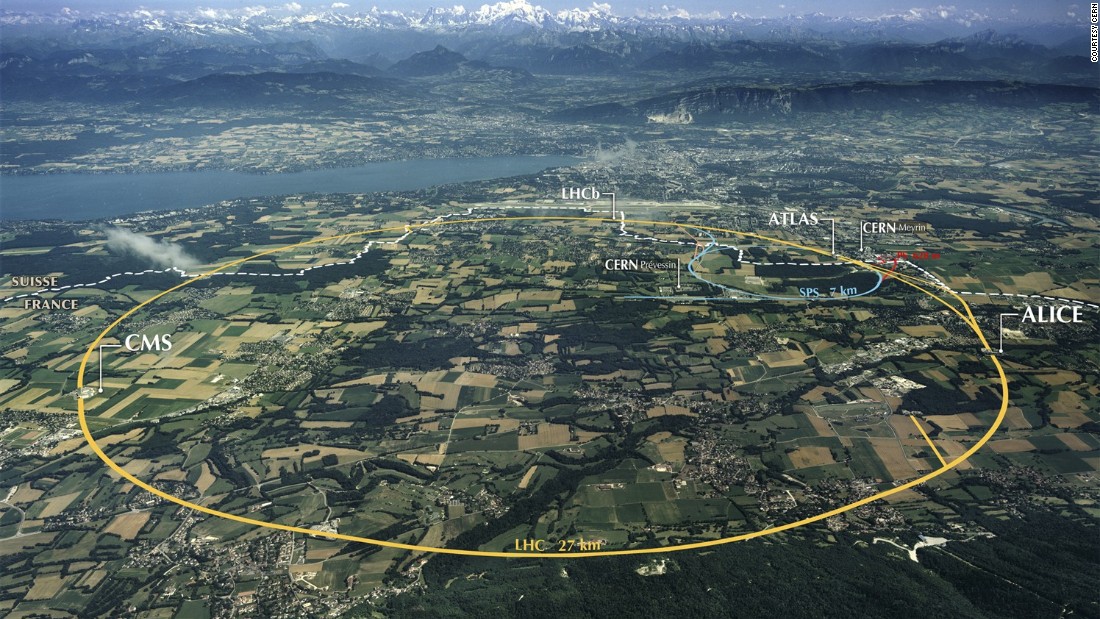 Often times, we get stuck in this place of communication - demanding that God explain everything in laymen’s terms to us before we obey his order. It can take a very long time for God to explain each part of why he is right to ask us to do something. It is similar to a child asking his teacher to explain why the Higg's-Boson particle he heard in the news is so important. The child would have to learn basic physical laws, then learn about mass, gravitational forces, electromagnetic forces, strong and weak forces, massless particles, charge, spin, colour charge, parity, leptons, quarks, bosons, and a whole host of other things.
Still, I can't really accept that this is how it is. It's a hard pill to swallow.
Tricky Tendencies and Habits

Christianity vs. Others
One thing that Christianity has that many other religions do not have is its ability to stand up under scrutiny. I have wrestled and wrestled with the bible and I have not been able to figure out anything wrong with it. The only problem that I have had is that of the empty promises. Dinosaurs, the age of the earth, evolution, 'cultural laws' (picking/choosing OT laws), chewing cud, order of creation, the possibility of the resurrection of Jesus, etc. - I have my answers to so far.
There is also a lot of power behind Christianity. A plethora of testimonies, much more powerful and trustworthy than ones I have seen from other religions. There are definitely powerful evil spirits with witchcraft, but it is very clear that they are evil spirits - they hold their witches captive and the witches/witchdoctors fear unbinding with the evil spirits. But of all the 'good spirit' testimonies, Christianity seems to have the most powerful and the most trustworthy ones.
Christian Testimony: Surprise Sithole

